Verbal reasoning is a branch of English, not a separate subject
I have said this to parents more times than anything else on this list: verbal reasoning is a stem of English. It is not a puzzle discipline that happens to use words.
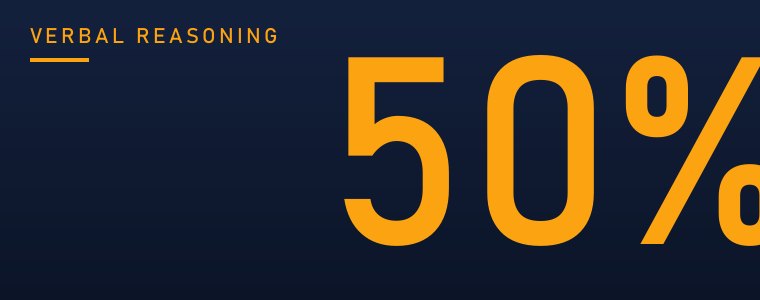
That matters because of how the marks fall. According to the partnership's entrance test page, English and verbal reasoning together carry 50% of the test, with 25% for non-verbal reasoning and 25% for mathematics. Half the paper rests on the same underlying thing, and that thing is vocabulary.
A child with a narrow vocabulary will hit a ceiling in verbal reasoning no matter how many technique books they work through. A child who reads widely arrives with the ceiling already raised.
The applied types: teachable, and quickly
I find it useful to split verbal reasoning the way you would split mathematics, into applied topics and language topics.
The applied types work like mathematical procedures. There is a rule, the rule can be taught, and once a child has it they improve fast:
- Letter sequences and number sequences
- Logic and encoding
- Letter codes and number codes
- Letter-coded calculations
- Finding a three-letter word inserted inside another word
These are genuinely easy to teach. If a child is struggling here, the gap is almost never the method. It comes back down to the vocabulary underneath, or to not having been shown the rule at all.
The language types: where the gap really opens
The other family is what I would call making a word, and it behaves completely differently:
- Anagrams
- Shuffled sentences
- Antonyms and synonyms
- Word relationships and closest meaning
This is where students underperform, and it is where I see the largest deviation in marks between the strongest and the weakest children in a class. Not a few marks. A gulf.
The cause is not effort or technique. It comes down to fluency of reading, comprehension, and having met a large amount of vocabulary in context. You cannot rearrange a sentence into sense if the words in it are unfamiliar, and no amount of practice on anagram method fixes that.
| Applied types | Language types |
|---|---|
| Letter and number sequences | Anagrams |
| Logic and encoding | Shuffled sentences |
| Letter and number codes | Antonyms and synonyms |
| Letter-coded calculations | Closest meaning |
| Three-letter word insertions | Word relationships |
| Quick to teach. A rule, then practice | Cannot be taught around. Rests on reading |
What the official guide shows
The partnership's free Entrance Test Familiarisation Guide demonstrates four verbal reasoning types:
- Word production, finding a four-letter word hidden across the end of one word and the start of the next
- Vocabulary, finding the two words most opposite in meaning
- Words in sentences, where three consecutive letters have been removed from a word and those letters themselves form a word
- Word relationships, finding the two words in five that do not belong
Notice that three of those four are vocabulary questions wearing a puzzle costume. The guide also states that the real test will include types it does not show, and that none of the schools keep past papers, so nothing on the market is working from the genuine article.
How to actually close a verbal reasoning gap
The order matters here, and most families get it backwards by starting with the workbook.
- Reading first, every day. Something slightly above their comfort level. This is the only thing that moves the language types.
- Collect words in context, not from lists. A word met in a novel sticks; a word met on a sheet of twenty does not.
- Teach the applied rules explicitly. They are quick wins, and quick wins buy a child's confidence for the harder work.
- Practise antonyms and synonyms deliberately, because that is where the deviation is widest and therefore where marks move fastest.
- Time it. Each paper is split into individually timed sections and a child cannot return to an earlier one.
For the other half of this 50%, see our guide to English and comprehension, and for the quarter alongside it, our guide to non-verbal reasoning.
See where your child stands today
Timed sections in the GL Assessment format, marked instantly, with a topic-by-topic breakdown. No sign-up to start.
Verbal reasoning is a stem of English, and the gap always comes back to vocabulary
I have said many times to parents that verbal reasoning is a stem of English. It sits closely with the English language, and the most difficult topic for a student is where there is a gap in their overall vocabulary.
There are a number of verbal topics I would class as applied subtopics, similar to mathematics: making a word, logic and sequences, encoding, letter sequences, number sequences, finding the three letter word inserted within a word, letter coded calculation. These applied types are very easy to teach. If there is a gap in them it just dabs back down to the overall vocabulary.
Whereas making a word, which is topics like anagrams, shuffled sentences, antonyms and synonyms, that is the area where I believe students underperform, and there is a large deviation of marks between the higher attaining students and the lower performing ones. Again it comes down to fluency of reading, understanding, and a general overview of a large context of vocabulary.
Mushtaque Ahmed, Founder of GrammarPath and Bright Mentors
Frequently asked questions
How much of the 11+ is verbal reasoning?
English and verbal reasoning together carry 50% of the marks in the West Midlands test, with 25% for non-verbal reasoning and 25% for mathematics. The partnership publishes the weighting but not a split between English and verbal reasoning within that half.
What verbal reasoning question types come up?
They divide into two families. Applied types include letter and number sequences, logic and encoding, letter codes and coded calculations, and finding a three-letter word inside another word. Language types include anagrams, shuffled sentences, antonyms and synonyms, and closest meaning.
Which verbal reasoning questions do children find hardest?
The language types: anagrams, shuffled sentences, antonyms and synonyms. This is where the deviation in marks between the strongest and weakest children is widest, and the cause is not technique but reading fluency and breadth of vocabulary met in context.
Is verbal reasoning just English?
It is a branch of English rather than a separate subject. The applied types have rules that can be taught quickly, but every one of them still rests on vocabulary underneath. A child with a narrow vocabulary hits a ceiling in verbal reasoning that no technique book will lift.
How do you improve at verbal reasoning?
Reading daily comes first, because it is the only thing that moves the language types. Collect vocabulary in context rather than from lists, then teach the applied rules explicitly since they are quick wins. Practise antonyms and synonyms deliberately, as that is where marks move fastest.
What does the official guide show for verbal reasoning?
Four types: word production, where a four-letter word is hidden across two words; vocabulary opposites; words in sentences, where three consecutive letters have been removed and themselves form a word; and word relationships. Three of the four are vocabulary questions in a puzzle format.