What non-verbal reasoning is worth
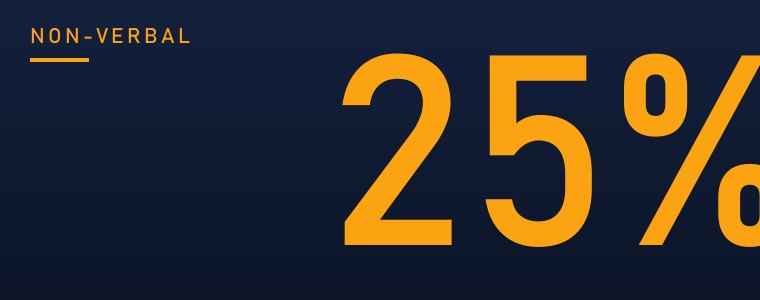
Non-verbal reasoning carries 25% of the marks in the West Midlands entrance test, according to the partnership's entrance test page. The published weighting is 50% for English and verbal reasoning, 25% for non-verbal reasoning and 25% for mathematics.
The section is named in full as Non-Verbal and Spatial Reasoning, so spatial work sits inside that same quarter rather than alongside it. The partnership defines the two strands precisely: non-verbal reasoning is about relationships between shapes and patterns, spatial reasoning is about relationships between shapes and space.
The question types, in two families
Parents ask for a list, and the honest answer is that the list is longer than most workbooks suggest. In practice the work divides into flat pattern questions and three-dimensional ones.
| Flat, pattern based | Three-dimensional, spatial |
|---|---|
| Complete the grid | Cube nets |
| Complete the pair | 3D building blocks |
| Horizontal and vertical codes | Folding along a line |
| Matrices | Fold and punch |
| Odd one out | |
| Sequences |
All of them need teaching. Very few children look at a worked example and deduce what the question is asking, and the ones who can are usually the ones who least need the practice. Assuming a bright child will "pick it up" is the commonest way a family loses this quarter of the paper.
The two that separate children
In my experience the hardest to teach, and the hardest to sit, are odd one out and sequences.
The reason is the same for both. The child is hunting for a minute detail inside the figure, and then has to work backwards, eliminating options rather than recognising an answer. Most question types reward spotting something. These two reward ruling things out, which is a slower and less natural way for a ten year old to think.
That matters more than it sounds, because each paper is divided into individually timed sections and a child cannot revisit an earlier section. Four minutes lost eliminating options on one sequence is four minutes that cannot be recovered later.
Why this section teaches better on a screen
This is the one part of 11+ preparation where I would genuinely rather teach online than in a room, and it surprises people.
Non-verbal reasoning is explained by drawing on the figure: rotating it, marking the line of symmetry, shading the cell that changes. On a screen the drawing tools do that instantly and the whole class sees the same annotated shape at the same size. In a classroom you are either crowded around one worksheet or you need a projector and a screen you can draw on, which is the same technology arriving by a more awkward route.
The practical version at home: work on a tablet or a printed sheet the child is allowed to draw all over. A non-verbal question answered without annotating the figure is usually a question answered by guessing.
What the official guide does and does not show
Worth knowing before you buy anything. The partnership publishes a free Entrance Test Familiarisation Guide, and its non-verbal section contains exactly two worked question types: Figures alike and Hidden shapes. Both are flat.
There is no cube net in it, no block count, no folded paper. That is not evidence those types are absent from the real test, and the guide warns in its own words that the real papers will contain types it does not show. But it does mean the official material is a much narrower sample than the section itself, and it explains why families who prepare only from the guide are surprised in September.
The partnership also states that none of the schools keep past papers, so no book on the market is working from the real thing either.
Practising it properly
- Rotate the types. A week on cube nets because they are enjoyable leaves sequences untouched. Cycle through them.
- Annotate everything. Marks on the figure are the working out.
- No ruler. The test forbids one, so a child who measures at home is practising a different task.
- Time single sections. The pressure in this section is pace, not difficulty.
- Teach elimination explicitly for odd one out and sequences. It is a method, and it can be taught.
For the spatial half of this section in more detail, see our guide to spatial reasoning, and for the other half of the paper, our guide to verbal reasoning.
See where your child stands today
Timed sections in the GL Assessment format, marked instantly, with a topic-by-topic breakdown. No sign-up to start.
Every type has to be taught, and the two that separate children are the ones that reward elimination
In non-verbal reasoning you have a vast array of topics. The main subtopics are things like complete the grid, complete the pair, codes which are horizontal and vertical codes, matrices, odd one out and sequences. Then on the spatial side you have cubes, 3D building blocks, folding along a line, fold and punch. There is a large number of topics within non-verbal and spatial reasoning combined.
I believe all of those topics need to be taught. There are very few students who can look at the example on their own and figure out the type of question and what it is asking them. The general nature of it needs teaching.
What I have found through my experience is that teaching non-verbal online is more effective than in class, only because the drawing tools you have at your disposal are more effective, and the visual element is hard to demonstrate in a classroom setting unless you use a projector and draw on your screen to show the students.
In terms of which topics are difficult, I find odd one out and sequences are the harder ones to teach, only because students are looking for minute details within the question to figure out what the answer is, and they have to negate or eliminate the answers to come to the right solution.
Mushtaque Ahmed, Founder of GrammarPath and Bright Mentors
Frequently asked questions
How much of the 11+ is non-verbal reasoning?
Non-verbal reasoning carries 25% of the marks in the West Midlands test. The published weighting is 50% for English and verbal reasoning, 25% for non-verbal reasoning and 25% for mathematics. Spatial reasoning sits inside that same 25%, since the section is named Non-Verbal and Spatial Reasoning rather than treating them separately.
What non-verbal reasoning question types come up?
The flat pattern types include complete the grid, complete the pair, horizontal and vertical codes, matrices, odd one out and sequences. The three-dimensional side includes cube nets, 3D building blocks, folding along a line, and fold and punch. All of them need teaching rather than being picked up from examples.
Which non-verbal reasoning questions are hardest?
Odd one out and sequences, for the same reason. Both require spotting a very small detail and then working backwards by eliminating options, rather than recognising an answer directly. That is slower and less natural for a ten year old, and it costs time in a section that cannot be revisited once it has moved on.
Can my child just pick up non-verbal reasoning from practice papers?
Very few can. Most children need each question type explained before practice does anything useful, and assuming a bright child will work it out is the commonest way families lose this quarter of the paper. Practice consolidates a method; it rarely supplies one.
Is it better to teach non-verbal reasoning online or in person?
Online has a genuine advantage here, unusually. Non-verbal reasoning is explained by drawing on the figure, and screen annotation does that instantly and at a size everyone can see. In a room you need a projector and a screen you can draw on to achieve the same thing.
Does the official familiarisation guide cover non-verbal reasoning fully?
No. Its non-verbal section shows only two worked types, Figures alike and Hidden shapes, both flat, with no cube nets, block counts or folded paper. The guide itself warns that the real test will contain types it does not demonstrate, so treat it as a sample of the format rather than a syllabus.