Nobody can publish the vocabulary that comes up in the West Midlands 11+, because none of the nineteen schools release past papers. Anyone selling you "the official 11+ word list" is selling you a guess.
What can be said accurately is which question types test vocabulary, how much of the paper they account for, and how children actually build the breadth those questions demand. That is more useful than a list anyway, and here is why.
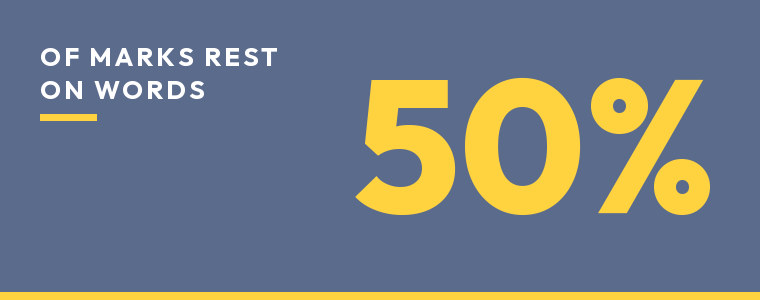
Half the paper rests on words
According to the partnership entrance test page, English and verbal reasoning together carry 50% of the marks, with 25% for non-verbal reasoning and 25% for mathematics.
Verbal reasoning is not a separate puzzle subject that happens to use words. It is a branch of English, and almost every question type in it rests on knowing what words mean. A child with a narrow vocabulary hits a ceiling in verbal reasoning that no amount of technique practice will lift.
The question types that are really vocabulary tests
| Question type | What it looks like | What it actually tests |
|---|---|---|
| Antonyms | Find the two words most opposite in meaning | Vocabulary |
| Synonyms and closest meaning | Find the two words closest in meaning | Vocabulary, with precision |
| Word relationships | Find the two words in five that do not belong | Vocabulary plus categorisation |
| Shuffled sentences | Rearrange words into a sensible sentence | Vocabulary plus grammar |
| Anagrams and word building | Make a real word from given letters | Breadth of words known |
| Comprehension | What does this word mean in this passage? | Vocabulary in context |
Six of the common types, and every one of them is a vocabulary question wearing a puzzle costume. This is why vocabulary is where the widest gap opens between the strongest and weakest children in a class. Not a few marks. A gulf.
The kind of vocabulary that appears
Without past papers, the honest guide is the register these tests are written in, and it is consistent: slightly formal, literary, and a step above everyday speech.
Think of the language of children's fiction written to be read rather than spoken. Words like reluctant, abundant, feeble, conceal, peculiar, vast, weary, summon. Not technical words, and not obscure ones. Ordinary ideas expressed in more formal words than a ten year old meets in conversation.
That is the gap reading closes and lists do not.
How to actually build it
The order matters here, and most families get it backwards by starting with the workbook.
- Read daily, slightly above comfort level. This is the only thing that moves the vocabulary-dependent question types.
- Collect words in context, not from lists. A word met in a novel sticks. A word met as number 14 of 20 on a sheet does not.
- Keep a book of words the child met and did not know, with the sentence they met it in. The sentence is the part that makes it stick.
- Practise antonyms and synonyms deliberately, because that is where the spread of marks is widest and so where improvement shows fastest.
- Teach the mechanical rules separately. Codes and letter sequences have rules and can be taught quickly. Do not let them crowd out the reading.
See our guide to verbal reasoning and our guide to English and comprehension.
See where your child stands today
Timed sections in the GL Assessment format, marked instantly, with a topic-by-topic breakdown. No sign-up to start.
Verbal reasoning is a stem of English
I have said this to parents more times than almost anything else. Verbal reasoning is a stem of English. It is closely tied to it. It is not a separate puzzle discipline that happens to use words, and treating it as one is why so much preparation stalls.
I find it useful to split it the way you would split mathematics, into applied topics and language topics. The applied ones, letter sequences, codes, coded calculations, finding a word hidden inside another, work like procedures. There is a rule, the rule can be taught, and once a child has it they improve quickly.
The language ones are different. Anagrams, shuffled sentences, antonyms and synonyms, closest meaning. This is where students underperform, and where I see the largest deviation in marks between the strongest and the weakest children in a class. The cause is not effort or technique. It is fluency of reading and how much vocabulary a child has met in context. You cannot rearrange a sentence into sense if the words in it are unfamiliar, and no amount of practice on anagram method will fix that.
Mushtaque Ahmed, Founder of GrammarPath and Bright Mentors
Frequently asked questions
Is there an official 11+ vocabulary list for the West Midlands?
No. None of the 19 partnership schools release past papers, so no one can publish the words that actually appear. Any list sold as the official 11+ vocabulary is a guess, however confident it looks.
How much of the 11+ depends on vocabulary?
A great deal. English and verbal reasoning together carry 50% of the marks, and most verbal reasoning question types, including antonyms, synonyms, closest meaning, word relationships and anagrams, are vocabulary questions in a puzzle format.
What kind of vocabulary comes up in the 11+?
A slightly formal, literary register: ordinary ideas expressed in more formal words than a ten year old meets in conversation, of the sort found in children's fiction written to be read rather than spoken. Not technical or obscure words.
What is the best way to build 11+ vocabulary?
Daily reading slightly above the child's comfort level, with words collected in context rather than from lists. Keep a book of unfamiliar words together with the sentence they were met in, because the sentence is what makes the word stick.
Do vocabulary lists work for the 11+?
Much less well than reading. A word met in a story is retained; a word met as item 14 of 20 on a worksheet usually is not. Lists have a place for deliberate antonym and synonym practice, but they cannot substitute for the breadth that reading builds.