The section is mostly worded, and that is the whole problem
Every year I take in a large cohort of children who are perfectly competent at mathematics and who find the 11+ maths section very difficult. The reason is almost never the arithmetic. It is that the majority of the section is worded problems.
A worded problem asks a child to do two separate things in sequence. First comprehend the situation and work out what is actually being asked. Only then decide which method applies. A child who has been taught to recognise a sum and execute it has practised the second step and never the first.
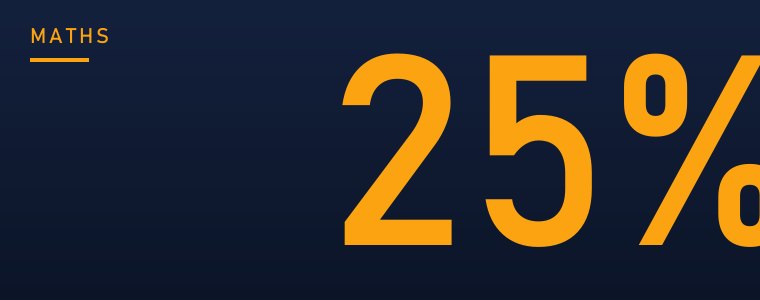
Maths carries 25% of the marks, according to the partnership's entrance test page, with 50% for English and verbal reasoning and 25% for non-verbal reasoning.
One question, three topics
The thing that catches families out is that a single question often draws on more than one topic at once. A question might require percentages, then weight, then proportion: three separate areas culminating in one answer.
The child has to understand the situation, identify all three, and apply them in the right order. Miss one and the whole answer goes, even though the arithmetic was fine.
That is why working through a topic list one chapter at a time prepares a child poorly. The test does not ask topics in isolation, and practice that does trains the wrong habit.
What is actually tested
The partnership does not publish a syllabus. What it does say is that the mathematics section draws on what has been taught in class, and that there may be some questions more challenging than a child is used to, so they can show how they apply the skills they already have to new problems.
In practice, the areas that come up repeatedly are these, and worded framing can be laid over any of them:
| Area | Where marks are lost |
|---|---|
| Percentages and fractions of amounts | Reverse questions: finding the original price |
| Ratio and proportion | Being given the difference rather than the total |
| Averages | Working backwards from a mean to a missing value |
| Area, perimeter and volume | Compound shapes, and being given the answer to find a side |
| Time, money and measures | Multi-step conversions inside a worded scenario |
| Number and place value | Rounding in context, where the answer must be a whole thing |
Recall has to be automatic
If a child is spending working memory retrieving a formula, they have none left for comprehending the problem. That is the mechanism behind most lost marks in this section.
What we do at GrammarPath is give every child a formula sheet built as a mind map rather than a list, and have them memorise it to a set format. The point is not that the formulas are hard. The point is that recall becomes automatic, so when the child meets a question requiring three topics they can spend their attention on working out which three.
Speed is where the marks actually go
I would say speed of answering causes more lost marks in maths than gaps in knowledge do. A child who understands every topic but works slowly will still lose marks, because they run out of time before they run out of ability.
The format makes this sharper than parents expect. Each paper is divided into individually timed sections, and a child cannot revisit an earlier section or move ahead. There is no banking time from an easy section to spend on a hard one.
There is also no calculator, no ruler and no scrap paper. Working out goes in the question booklet, which is permitted, and only the separate answer sheet is marked.
How to practise it
- Worded problems from the start. If a practice sheet is a column of sums, it is building the wrong skill.
- Mix the topics deliberately. Do not let a child know a page is about ratio before they read the question.
- Drill recall separately and briefly. Five minutes of formula recall daily beats an hour on a Sunday.
- Time single sections, because pace is the real constraint.
- No calculator, ever, and working out in the margin rather than on a separate sheet.
You can see how this feels under time pressure on our free maths assessment, which is weighted towards exactly these multi-step worded problems.
See where your child stands today
Timed sections in the GL Assessment format, marked instantly, with a topic-by-topic breakdown. No sign-up to start.
They can do the maths. What they cannot do is unpack the sentence it is hidden in
Teaching mathematics all the way up to A level has let me see how children in Year 3, 4 and 5 grasp concepts, and every year we have a large cohort who find worded problems very difficult. The 11+ examination is majority worded problems, so they have to comprehend and understand the nature of what is being asked, and then use their applied understanding of formulas from different topics and put them together.
A particular question might ask a child to apply percentages, then weight, then proportion. That is three separate topics all culminating in one question, and they are required to unlock it in order. First they have to understand it, then apply it.
So in the gist, this requires students to be very adept at understanding, and at training their mind to recall formulas. Through our tutoring experience we always give a formula sheet in the form of a mind map to every child and get them to memorise it to a certain format, so when it comes to application they can recall and apply those formulas when necessary.
I feel the speed of answering questions is what causes a lot of children to make mistakes and get a lower mark in mathematics, because they are unable to understand the problem and then decide which formula to apply quickly enough.
Mushtaque Ahmed, Founder of GrammarPath and Bright Mentors
Frequently asked questions
How much of the 11+ is maths?
Mathematics carries 25% of the marks in the West Midlands test. The published weighting is 50% for English and verbal reasoning, 25% for non-verbal reasoning and 25% for mathematics.
What maths topics come up in the 11+?
Percentages and fractions of amounts, ratio and proportion, averages, area, perimeter and volume, time, money and measures, and number and place value. The partnership does not publish a syllabus, but it states the section draws on classroom mathematics with some questions more challenging than a child is used to.
Why do children find 11+ maths harder than school maths?
Because most of the section is worded problems. A worded problem asks a child to comprehend the situation first and only then choose a method, and a child taught to recognise a sum and execute it has practised the second step and never the first.
Do 11+ maths questions cover more than one topic at a time?
Frequently. A single question might need percentages, then weight, then proportion, with all three culminating in one answer. Miss one and the mark goes even though the arithmetic was correct, which is why working through a topic list one chapter at a time prepares a child poorly.
Where do children lose the most marks in 11+ maths?
Speed, more than knowledge. A child who understands every topic but works slowly still loses marks, and the format makes it sharper: each paper is split into individually timed sections and a child cannot revisit an earlier one, so there is no banking time from an easy section for a hard one.
Can my child use a calculator in the 11+ maths section?
No. Calculators, rulers and protractors are all prohibited, and there is no scrap paper. Working out goes in the question booklet, which is allowed, and only the separate answer sheet is marked.