Sutton Coldfield Grammar School for Girls does not care where you live. Its published arrangements say so plainly: "The School does not have a residence requirement and entry to the School is solely as a result of scores gained in the Entrance Test, whether or not candidates live in Birmingham" (Birmingham City Council, secondary admission arrangements 2026).
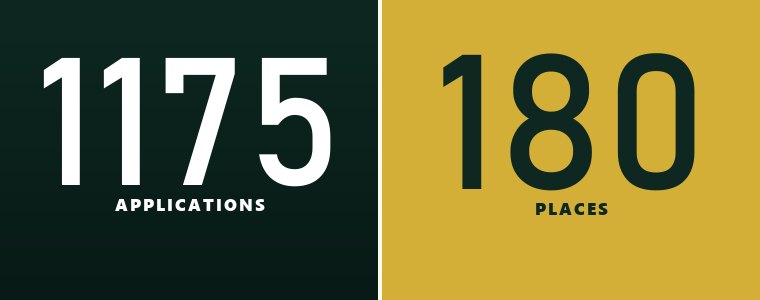
It admits 180 girls into Year 7 from its site on Jockey Road, and for September 2026 the qualifying score was 205. In 2025 it received 1,175 applications for those 180 places, which is roughly six and a half applications per place (Birmingham City Council, secondary admission arrangements 2026).
No residence requirement at all
This is the single most important thing to understand about the school, and it is the opposite of how the King Edward VI Foundation schools work. There is no catchment map, no ward list, and no advantage from living nearby. A girl in Wolverhampton and a girl on Jockey Road are treated identically, provided both clear the qualifying score.
Distance appears exactly once, as the final tie-break when two girls have the same standardised score, measured in a straight line to the main reception (Birmingham City Council, secondary admission arrangements 2026).
For families who have worked out that they sit outside every Foundation catchment, that changes the picture completely. It is the same position Bishop Vesey's takes, and between them the two schools give Sutton Coldfield a pair of grammar schools that are open to the whole city on test score alone.
How places are allocated
Three categories, each ranked by test score (Birmingham City Council, secondary admission arrangements 2026):
| # | Category | Ranked by |
|---|---|---|
| 1 | Looked after, previously looked after, and internationally looked after or previously looked after children who achieve the qualifying score | Standardised score |
| 2 | Children attracting the pupil premium who achieve the qualifying score, limited to no more than 36 | Standardised score |
| 3 | All other children who achieve the qualifying score | Standardised score, then distance as a tie-break |
Note that the school's own website presents looked after status, pupil premium and proximity as a tie-break sequence (the school's Year 7 admissions page). The council's determined arrangements set them out as ranked categories, with distance used only to separate equal scores. If the two ever appear to disagree, the determined arrangements are the version that governs offers.
On pupil premium, eligibility rests on free school meal registration at any point in the six years before the entrance test, and the eligibility form must be submitted before the day of the test. Late evidence is considered only after the main round of allocations in March.
How competitive is it really?
Most school guides avoid this question because the numbers are not on school websites. They are published by the council, and they are worth seeing (Birmingham City Council, secondary admission arrangements 2026):
| Year | Applications naming the school | Places | Roughly |
|---|---|---|---|
| 2023 | 1,078 | 180 | 6.0 per place |
| 2024 | 1,158 | 180 | 6.4 per place |
| 2025 | 1,175 | 180 | 6.5 per place |
Those counts are applications ranking the school anywhere from first to sixth preference, not the number of girls who cleared the qualifying score, so they overstate the true contest for places. What they do show reliably is direction: demand has risen in each of the last three years.
Sutton's two grammar schools work the same way
This is the part families in Sutton Coldfield most often miss. The two grammar schools in the town run on almost identical arrangements, and both differ sharply from the Foundation model (Birmingham City Council, secondary admission arrangements 2026).
| Sutton Coldfield Girls | Bishop Vesey's (boys) | |
|---|---|---|
| Places | 180 | 192 |
| Catchment | None. No residence requirement at either school | |
| Sibling priority | None at either school | |
| Categories | Three, each ranked by standardised score | |
| Pupil premium cap | 36 | 38 |
| 2025 applications | 1,175 | 1,138 |
For a family with a son and a daughter, that symmetry matters. It is the exact opposite of the two Handsworth schools, where the girls' catchment is nearly three times the size of the boys' and the same address can put one child in and the other out. In Sutton, both children face the same rules.
What this means for your application
The mark is the whole story here. There is no address that helps and no sibling that helps, so preparation is the only lever you control. The test itself is the shared two-paper West Midlands test (West Midlands Grammar Schools, the entrance test), identical to every other partnership school.
If you are outside every Foundation catchment, put both Sutton schools on your list and treat them as genuine options rather than long shots. If you are inside a Foundation catchment, you are giving up that advantage here and competing on score alone, which is worth weighing when you order your preferences. There is a fuller comparison of all eight schools in the complete guide.
Sutton's grammar schools are not only for Sutton families
One misconception I often hear from parents is that Sutton Coldfield grammar schools are only for families living in Sutton Coldfield. I would always advise parents to check the current admissions criteria rather than making assumptions based on postcode.
For a girl who achieves a strong 11+ score, I would also encourage parents to keep their options open. A strong score can potentially give you more choice, but the decision shouldn't be based on the score alone. I would look at catchment, admissions criteria, travelling distance and, most importantly, whether the school suits your daughter.
My advice is simple: understand your options before the test, prepare your daughter properly, and don't decide on a school based purely on reputation. The aim isn't simply to get a grammar school place, it's to find the school where your daughter will thrive.
Mushtaque Ahmed, Founder of GrammarPath and Bright Mentors
See where your child stands today
Timed sections in the GL Assessment format, marked instantly, with a topic-by-topic breakdown. No sign-up to start.
Frequently asked questions
Does Sutton Coldfield Grammar School for Girls have a catchment area?
No. Its determined admission arrangements state that the school does not have a residence requirement and that entry is solely as a result of scores gained in the entrance test, whether or not candidates live in Birmingham. Distance is used only as a tie-break between identical scores.
How many places does Sutton Coldfield Grammar School for Girls offer?
The published admission number is 180 girls into Year 7. In 2025 the school received 1,175 applications naming it somewhere in the six preferences, which is roughly six and a half applications per place.
What score do you need for Sutton Coldfield Grammar School for Girls?
For September 2027 entry the qualifying score is 205. Applicants who clear it are ranked purely by standardised score within their category, so there is no higher priority score to aim for as there is at the King Edward VI Foundation schools.
Do siblings get priority at Sutton Coldfield Grammar School for Girls?
No. The oversubscription criteria make no reference to siblings. The three categories are looked after children, pupil premium applicants capped at 36, and all other applicants, each ranked by standardised score.
Do Bishop Vesey's and Sutton Coldfield Girls use the same admissions rules?
Almost identically. Neither has a catchment area or residence requirement, neither gives sibling priority, both use three categories ranked by standardised score, and both cap the pupil premium category at a fixed number, 36 at the girls' school and 38 at Bishop Vesey's.