Factors go into a number. Multiples come out of it. Children mix those two up constantly, and the mixing up costs more marks than the arithmetic does.
Maths carries 25% of the marks. Almost all of it arrives as worded problems rather than bare calculations, so the reading is part of the maths.
The three words, kept apart
| Word | Means | Example with 12 |
|---|---|---|
| Factor | Divides into it exactly | 1, 2, 3, 4, 6, 12 |
| Multiple | In its times table | 12, 24, 36, 48, 60 |
| Prime | Exactly two factors: 1 and itself | 12 is not prime |
A memory hook that works: factors are fewer, multiples are many. A number has a limited list of factors and an endless list of multiples.
Finding factors without missing any
Work in pairs, from the outside in, and you will never drop one.
The factors of 36:
- 1 times 36
- 2 times 18
- 3 times 12
- 4 times 9
- 6 times 6
Stop when the pair meets itself. That gives 1, 2, 3, 4, 6, 9, 12, 18, 36, which is nine factors.
Children who hunt randomly miss one almost every time. Working in pairs from 1 upwards makes it systematic, and the stopping point is obvious.
The primes to know by heart
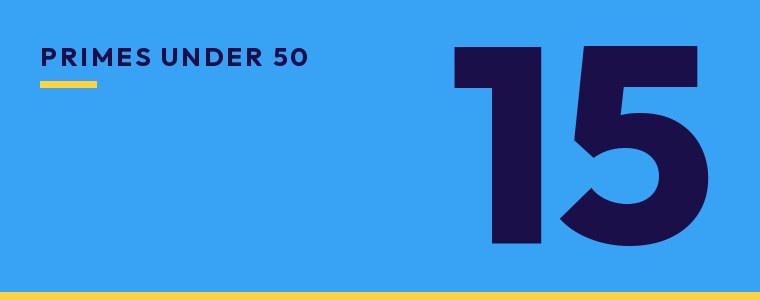
Up to 50, there are fifteen of them:
2, 3, 5, 7, 11, 13, 17, 19, 23, 29, 31, 37, 41, 43, 47
Two things children get wrong, every year:
- 1 is not prime. It has only one factor, not two.
- 2 is prime, and it is the only even prime. Every other even number has 2 as a factor.
Highest common factor and lowest common multiple
Both are easier than they sound if you list rather than theorise.
HCF of 12 and 18: factors of 12 are 1, 2, 3, 4, 6, 12. Factors of 18 are 1, 2, 3, 6, 9, 18. The largest in both is 6.
LCM of 4 and 6: multiples of 4 are 4, 8, 12, 16. Multiples of 6 are 6, 12, 18. The first in both is 12.
These turn up in worded problems about two buses leaving at different intervals, or sharing items into equal groups. The giveaway for LCM is "when will they next happen together".
See where your child stands today
Timed sections in the GL Assessment format, marked instantly, with a topic-by-topic breakdown. No sign-up to start.
The words cost more marks than the maths
If a child loses marks in this topic, nine times out of ten they did the arithmetic perfectly and answered the wrong question. They were asked for a multiple and gave a factor.
So I teach the vocabulary before the method. Factors are fewer, multiples are many. Say it, write it at the top of the page, and check which word the question used before starting.
The other thing is to work systematically rather than by inspiration. Factor pairs from the outside in, every time, so nothing is missed. Children who hunt for factors randomly drop one almost every time, and they never notice because the answer still looks plausible.
Mushtaque Ahmed, Founder of GrammarPath and Bright Mentors
Frequently asked questions
What is the difference between a factor and a multiple?
A factor divides into a number exactly; a multiple comes out of its times table. The factors of 12 are 1, 2, 3, 4, 6 and 12, while its multiples are 12, 24, 36 and so on. Factors are fewer, multiples are many.
How do you find all the factors of a number?
Work in pairs from 1 upwards and stop when the pair meets itself. For 36: 1 times 36, 2 times 18, 3 times 12, 4 times 9, 6 times 6. That gives nine factors and nothing is missed.
Is 1 a prime number?
No. A prime has exactly two factors, 1 and itself, and 1 has only one factor. This is one of the most common errors children make, along with forgetting that 2 is prime and is the only even prime.
Which prime numbers should my child know?
All fifteen up to 50: 2, 3, 5, 7, 11, 13, 17, 19, 23, 29, 31, 37, 41, 43 and 47. Knowing them by sight saves working them out under time pressure.
How do you find the highest common factor?
List the factors of both numbers and take the largest that appears in both. For 12 and 18 the shared factors are 1, 2, 3 and 6, so the HCF is 6. Listing is faster and safer than any method children are likely to half-remember.