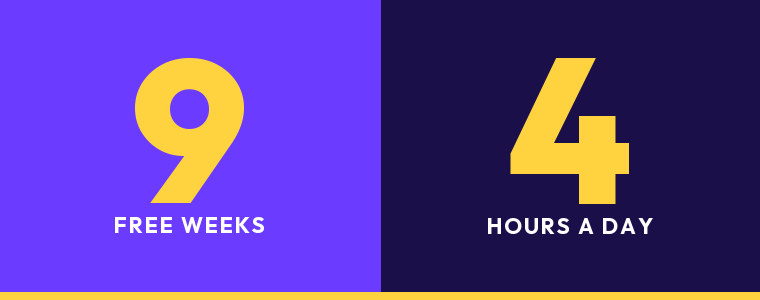
Easter is the starting point to really turn things up: three to four hours a day, broken into two sessions.
And it is the start of something families rarely count properly, which is about nine weeks of free time between here and the test.
Easter is the turning point
Up to now the work has been about routine. From Easter it is about volume.
The reason is the calendar. With the test in September, Easter is the last holiday far enough out that gains still consolidate, and close enough that a child can sustain the intensity. Christmas was too early. The summer is the final push, not the place to learn new material.
So a study plan at Easter is close to mandatory, and it is the point at which free time starts being used deliberately rather than opportunistically.
The nine weeks, counted
Worth doing the arithmetic, because it reframes what is left.
| Block | Roughly |
|---|---|
| Easter holiday | 2 weeks |
| Summer half term | 1 week |
| Summer holiday | 6 weeks |
| Total free time before the test | about 9 weeks |
Nine weeks of time that is yours, in a run, with no school in it. Used properly that is enough to change an outcome, which is why Easter is where the plan starts rather than where it ends. See our half-term plan and our guide to the summer.
Three to four hours, in two sessions
Not three to four hours in one block. Split it.
- Morning session, the harder subjects while they are fresh.
- Evening session, after a proper break in between.
- Two subjects per session, not one for two hours.
- A written plan for the fortnight, before it starts.
- Days off in the plan, deliberately.
The split is what makes three or four hours survivable. One long block produces an hour of work and two hours of drift.
What to cover
Everything, but weighted towards practice rather than teaching.
| Area | Easter work |
|---|---|
| Non-verbal | A lot of practice, volume of questions |
| Maths | Drills, timed quick tests, speeding up |
| Maths, worded | Real work on word problems |
| Verbal reasoning | A lot of practice, every type |
| English | Comprehension, and a rerun of the lot |
| Vocabulary | Words, definitions, spellings |
| SPaG | Punctuation and grammar rules |
| Figurative language | Simile, metaphor, personification |
| Format | A lot of multiple choice practice |
Two things on that list get skipped and should not be. Figurative language, because it is examinable and rarely drilled. And multiple choice practice, because the format is a skill of its own and Easter is when to make it automatic.
See our word problems guide and our SPaG guide.
If you are away
Easter is different from Christmas here, and the advice is accordingly firmer.
If you go away, try to put some time aside. It is genuinely difficult to allocate time on a family holiday, so if you can do it, ideal, and if you cannot, do not wreck the holiday over it. But if you are at home, it is very important that the study routine starts from the Easter holidays.
The mistake families make
- Treating Easter like Christmas. Consistency was right in December. Volume is right now.
- No written plan. Two weeks without one becomes four days of work.
- Teaching new material. Easter is for practice and repair, not first encounters.
- Only the strong subjects. Children drift to what they enjoy. The plan should not let them.
- Forgetting registration. It closes in late June, with access arrangements earlier still. See our registration guide.
See where your child stands today
Timed sections in the GL Assessment format, marked instantly, with a topic-by-topic breakdown. No sign-up to start.
This is where you turn it up
I would say the Easter holiday is the starting point to really turn things up. Normally, from our experience in tutoring, we push students to at least three to four hours of work per day, broken into two sessions, morning and evening.
A lot of work in terms of practising non-verbal questions, doing maths drills, quick tests, speeding the time up, and really working on word problems as well. Same thing with verbal reasoning and English comprehension: a lot of work on that, ideally with words, learning definitions, spellings, SPaG and also figurative language. So having a rerun of that, and doing a lot of multiple choice practice. Having a study plan for Easter is probably more mandatory.
It is the start of utilising the free time they have. If they go on a holiday then try to put some time out, though it is very difficult on a family holiday. But if they are at home then it is very important to start the study routine from the Easter holidays. Easter is two weeks normally, then you have half term that follows, and then you have the summer holidays. So in total that is potentially nine weeks of free time, which they can really gear up and make some ground in.
Mushtaque Ahmed, Founder of GrammarPath and Bright Mentors
Frequently asked questions
How much 11+ work should a child do at Easter?
Three to four hours a day, broken into two sessions, morning and evening, with two subjects in each. The split is what makes that much survivable, since one long block tends to produce an hour of work and two hours of drift.
How much free time is left after Easter before the 11+?
About nine weeks: roughly two weeks of Easter holiday, one week of summer half term and six weeks of summer holiday. Used properly that is enough time in a run to change an outcome.
What should Easter revision cover for the 11+?
Practice rather than teaching: non-verbal volume, maths drills and timed quick tests, real work on word problems, verbal reasoning, comprehension, vocabulary and spellings, SPaG, figurative language, and a lot of multiple choice practice.
Why does Easter matter more than Christmas for the 11+?
The calendar. With a September test, Easter is the last holiday far enough out for gains to consolidate and close enough for a child to sustain intensity. Christmas is too early, and the summer is the final push rather than the place to learn new material.
What do families get wrong at Easter?
Treating it like Christmas, working without a written plan so a fortnight becomes four days, teaching new material instead of practising and repairing, and letting a child drift to their stronger subjects.